Astar vs Rubia Lining — Which Should Matching Centres Stock?
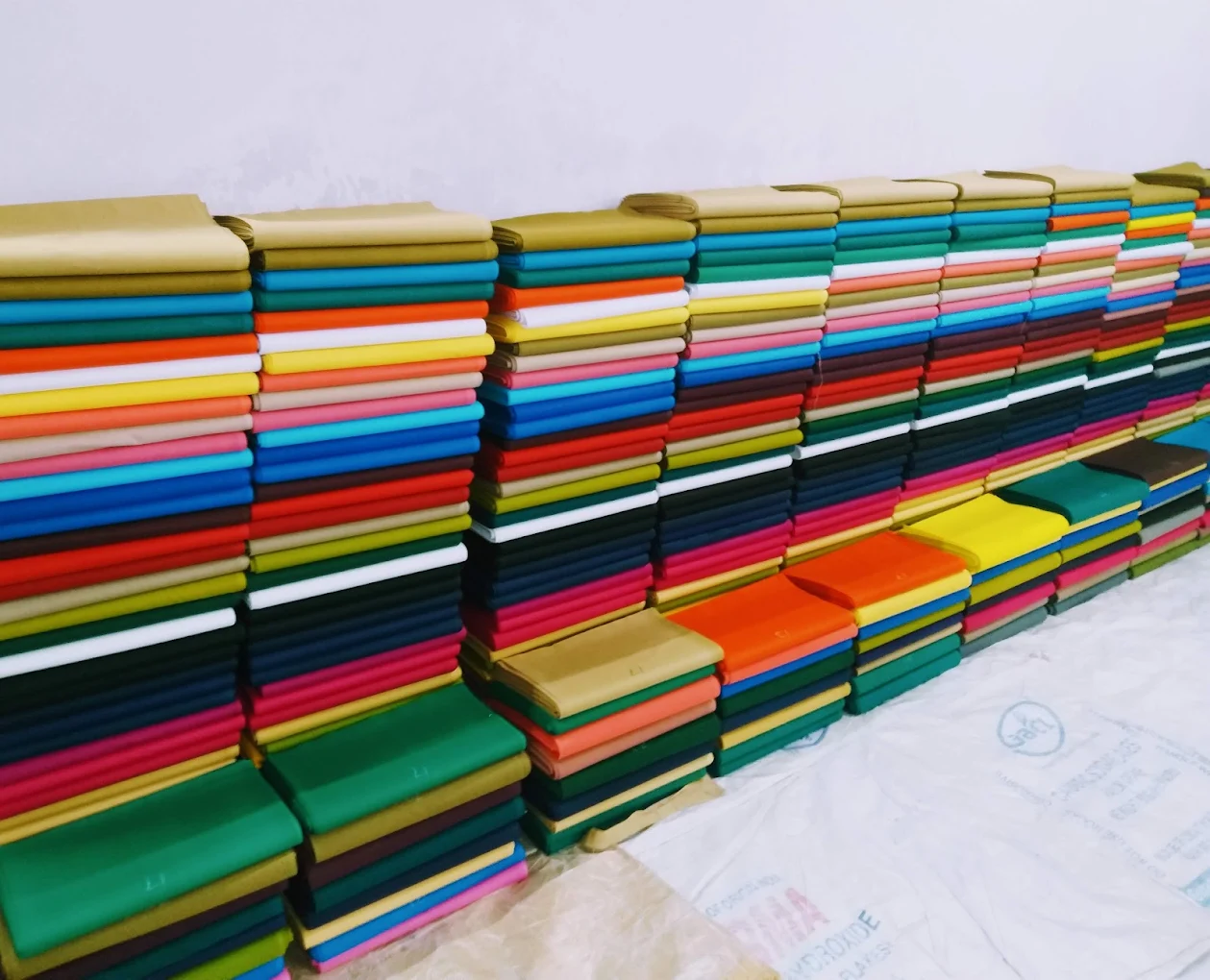
Buyers often ask whether they need “astar” or “Rubia.” Both are lining cloths manufactured in Pali, but they serve different garment needs. A third search term — PC Astar (poly-cotton astar) — sits between them. Choosing the wrong quality leads to complaints about drape, weight, or durability — especially on sarees sold through matching centres.
What is astar fabric?
Astar is a general-purpose lining cloth used inside sarees, lehengas, kurtas, and blouses. Cotton astar is the default everyday inner. PC Astar is the poly-cotton version buyers type when they want a wrinkle-resistant lining that still feels closer to cotton than a fully synthetic cloth.
What is Rubia (terry rubia 2x2)?
Rubia is the head term matching centres use for a denser lining. Terry rubia — often called terry rubia 2x2 — is the common weave: more body, smoother hand-feel against the skin, and better longevity after repeated washing than cotton astar or PC Astar.
Cotton astar vs PC Astar vs Rubia
| Attribute | Cotton astar | PC Astar | Rubia (terry rubia 2x2) |
|---|---|---|---|
| Composition | Cotton lining | Poly-cotton astar (PxC) | Heavier cotton weave |
| Weight & feel | Lightweight | Light–medium, crease-resistant | Heavier, more body |
| Cost per metre | Lower | Mid | Higher |
| Best for | Volume everyday lining | Easy-care blouse/saree inner | Bridal/festive sarees |
Quick decision guide
Choose cotton astar for volume everyday stock and price-sensitive blouse lining. Choose PC Astar when wrinkle resistance matters. Choose Rubia (terry rubia 2x2) for bridal/festive sarees, heavier georgette or silk bodies, and boutique customers who notice fabric hand-feel.
Many matching centres stock all three: a core astar shade card, PC Astar in fast-moving colours, and a smaller Rubia assortment. Browse cotton astar, PC Astar, and Rubia on our astar fabric pages or enquire on WhatsApp for current shade availability.